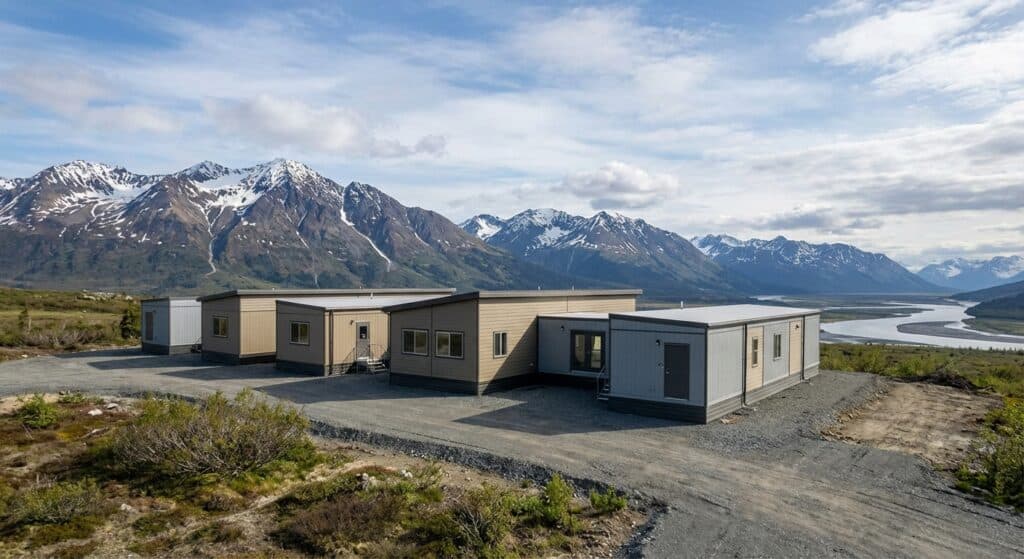
Defining Modular Site Offices
Modular site offices represent a modern approach to temporary or semi-permanent workspace solutions, offering distinct advantages in construction projects. Unlike traditional builds, modular units are prefabricated off-site in a controlled factory environment. This method streamlines the construction process, making them a compelling choice when comparing modular vs traditional office setups.
Their construction involves assembling components in modules that are then transported to the site and connected, providing a flexible and efficient solution for various project needs. This section explores the key characteristics and benefits that differentiate modular site offices.
Construction and Design of Modular Units
Modular site offices are built using standardized components and processes, ensuring consistent quality and structural integrity. This factory-controlled environment minimizes delays due to weather and allows for rigorous quality checks at each stage of production. The design often incorporates durable materials suitable for diverse job site conditions, contributing to their longevity.
These units can be customized in terms of layout, size, and interior finishes to meet specific project requirements. Whether you need individual offices, meeting rooms, or specialized workspaces, modular construction offers significant adaptability. The ability to stack or combine multiple units also provides scalability for growing project demands. For more on adaptable structures, explore our range of https://ejhdistribution.com/products/creative/creative-structures/ creative structures.
Key Benefits of Choosing Modular
The advantages of modular site offices are numerous, making them a preferred option for many businesses. One of the primary benefits is speed of deployment; since much of the construction happens off-site, installation on location is significantly faster compared to traditional builds. This rapid turnaround helps projects stay on schedule and reduces on-site disruption.
Another crucial benefit is cost-effectiveness. The controlled manufacturing process leads to less material waste and more efficient labor utilization, often resulting in lower overall costs. Furthermore, modular units are designed for easy relocation and repurposing, offering excellent long-term value and flexibility for future projects. This adaptability is a significant factor in the debate of modular vs traditional site offices, and offers a different approach than structures like https://ejhdistribution.com/blog/geodesic-domes-vs-traditional-tents/ geodesic domes versus traditional tents.
Common Applications and Versatility
Modular site offices are highly versatile and suitable for a wide array of applications across various industries. They are commonly used as administrative offices, security hubs, first aid stations, break rooms, and meeting facilities on construction sites. Their portability makes them ideal for temporary projects that require frequent relocation or expansion. For more information on different types of structures, consider exploring our range of products for more.
Beyond construction, modular units serve educational institutions, healthcare facilities, and event management as temporary classrooms, clinics, or command centers. Their robust construction and customizable interiors allow them to function effectively in diverse environments, showcasing their practical superiority in many scenarios compared to traditional site office alternatives.
Exploring Traditional Site Offices
Traditional site offices, often built directly on-site using conventional construction methods, represent a time-honored approach to temporary or permanent project infrastructure. Understanding the characteristics, advantages, and limitations of traditional offices is crucial when evaluating modular vs traditional construction options for your next project.
While modular solutions have gained popularity, traditional methods still offer specific benefits and remain the preferred choice in certain scenarios. This section will delve into what defines these conventional structures, including the materials used, much like understanding different types of event tent fabrics.
Characteristics of Traditional Construction
Traditional site offices are constructed from the ground up at the project location, similar to standard buildings. This process involves a sequence of steps, from laying foundations to erecting walls and roofs, all performed on-site. This contrasts with more modern approaches, such as the innovative modular structures for outdoor events.
- On-Site Build: All construction phases occur directly at the desired location.
- Custom Materials: A wide range of conventional building materials can be used, including wood, steel, concrete, and various cladding options.
- Skilled Labor: Requires a diverse team of skilled tradespeople, such as carpenters, masons, electricians, and plumbers, working concurrently on-site.
- Foundation-Dependent: Typically requires a permanent or semi-permanent foundation to support the structure.
Potential Drawbacks of Traditional Offices
Despite their established nature, traditional site offices come with several potential disadvantages that can impact project timelines and budgets. These drawbacks are often key factors driving businesses to consider modular vs traditional alternatives, much like how choosing the right glamping tent impacts a hospitality business.
- Extended Timelines: Construction can be subject to weather delays, material procurement issues, and the complexities of coordinating multiple on-site trades.
- Higher On-Site Disruption: The presence of construction teams, equipment, and materials for extended periods can disrupt ongoing project activities or surrounding environments.
- Limited Relocability: Once built, traditional offices are generally fixed structures, making relocation difficult, costly, or impossible.
- Variable Quality Control: While skilled, on-site construction can lead to variations in quality depending on labor availability and supervision.
- Increased Waste: On-site construction often generates more waste material compared to the controlled environment of modular factory production.
When to Choose Traditional Site Offices
Even with the rise of modular solutions, traditional construction still holds its ground in specific situations where its characteristics align better with project requirements. The decision between modular vs traditional often hinges on these unique needs.
- High Customization Needs: When a highly specialized design or unique architectural aesthetic is paramount, traditional construction offers unparalleled flexibility.
- Permanent Structures: For long-term or permanent installations where future relocation is not a concern, traditional builds can be robust and integrate seamlessly with existing infrastructure.
- Complex Site Conditions: In cases where site access is extremely limited for transporting large modular sections, or when intricate foundational work is required, on-site construction may be more feasible.
- Local Labor Availability: If there is a strong local workforce capable of traditional construction, this can sometimes reduce overall project costs and support local economies.
Cost Considerations: Modular Vs Traditional
Understanding the financial implications is crucial when deciding between a modular vs traditional site office. While upfront pricing can vary based on size, design, and site preparation, the overall cost structure often differs significantly between these two approaches.
Modular construction frequently benefits from economies of scale due to factory-controlled environments, which can lead to tighter budget control. Traditional construction, conversely, may incur unexpected costs related to weather delays, on-site labor inefficiencies, and material waste. For a deeper dive into the advantages of modular construction, explore our guide on modular dorms for more.
Several factors influence the overall cost for both modular vs traditional site offices, affecting your budget planning.
- Material Costs. Modular units often use standardized materials purchased in bulk, potentially reducing per-unit costs. Traditional builds involve on-site material procurement, which can be subject to market fluctuations and higher waste.
- Labor Expenses. Factory assembly for modular offices centralizes labor, making it more efficient and less susceptible to varying on-site labor rates or delays. Traditional construction relies heavily on specialized on-site trades, which can accumulate significant costs over time.
- Foundation and Site Preparation. Both options require site preparation, but modular units may need less extensive or specialized foundations, potentially lowering these costs.
- Transportation and Installation. Modular offices incur transportation costs to move pre-built sections to the site. Installation is typically quicker, but specialized equipment may be needed for placement. Traditional builds avoid these specific transportation costs but involve prolonged on-site construction.
- Permitting and Inspections. The permitting process can differ, with modular units often having factory inspections that streamline on-site checks. Traditional construction typically involves numerous on-site inspections throughout the build process.
- Maintenance and Operational Costs. The efficiency and build quality of modular units can sometimes lead to lower long-term maintenance and operational costs, particularly concerning energy efficiency.
Deployment Speed and Site Impact
Modular structures offer significant advantages in deployment speed and minimizing site disruption compared to traditional construction methods. For instance, exploring innovative modular structures for outdoor events can highlight how these systems are designed for rapid assembly and disassembly, reducing the overall time and impact on a venue.
The speed at which a site office can become operational is often a critical factor for project timelines. When comparing modular vs traditional construction, modular solutions offer a distinct advantage in deployment speed.
Modular units are fabricated off-site in a controlled factory environment. This concurrent construction process means that while site preparation is underway, the office modules are already being built. Once the site is ready, these pre-assembled modules are transported and quickly installed, significantly reducing on-site construction time.
Traditional site offices, on the other hand, require the entire build process to occur at the project location. This includes foundational work, framing, roofing, and interior finishes, all of which are subject to weather delays, labor availability, and material delivery schedules. The extended on-site presence of construction crews and materials can lead to greater disruption.
Our team has found that the speed of modular setup significantly reduces site disruption. This efficiency minimizes noise, traffic, and general clutter around the main project area, allowing other construction activities to proceed with fewer interruptions. For projects with tight schedules, the rapid deployment of a modular vs traditional setup is invaluable, as detailed in our guide to modular dorms.
Furthermore, modular construction often involves less waste generation on-site, contributing to a cleaner and safer work environment. The streamlined installation process also means fewer deliveries and less heavy equipment movement, further reducing the overall site impact. This is a crucial element in the ongoing debate of modular vs traditional solutions, and understanding these differences can help in making informed decisions for your projects.
Durability and Longevity Comparison
Understanding the durability and longevity of site offices is crucial for long-term project planning. This section evaluates the materials, construction quality, weather resistance, and maintenance requirements for both modular vs traditional site offices, helping you assess their long-term performance, and how they compare to other creative structure options like a dome vs tent design.
Material Quality and Construction Standards
The core difference in durability often stems from the materials and construction methods employed. Modular site offices are typically constructed in a controlled factory environment, allowing for precise manufacturing and consistent quality control. This often results in robust structures designed to withstand transport and repeated assembly, a key advantage when comparing modular tents vs traditional tents, much like the benefits seen in modular spa units for more.
Maintenance Requirements and Lifespan
The longevity and upkeep of site offices are significantly influenced by their construction. Modular units, designed for repeated assembly and disassembly, often use robust materials that contribute to a longer lifespan with proper care, similar to how some event structures are built for durability. Traditional offices, while potentially very sturdy, can experience wear and tear more rapidly if not consistently maintained, and their lifespan is more closely tied to the initial build quality and ongoing site conditions.
- Modular Offices: Typically require less intensive maintenance due to their durable, factory-finished components. Regular cleaning and occasional checks of seals and structural integrity are usually sufficient.
- Traditional Offices: May need more frequent upkeep, including painting, sealing, and repairs to address issues arising from weather exposure and on-site wear.
The long-term cost and usability of a site office are heavily influenced by its maintenance needs and overall lifespan. When comparing modular vs traditional, these aspects are significant considerations for any project budget, and understanding the durability of structures can be as important as understanding the support for businesses, like with the https://ejhdistribution.com/blog/posh-outdoors-glamping-business-america-support/.
- Modular Offices: Generally require less intensive maintenance due to their standardized construction and durable materials. Components are often designed for easy replacement or repair, contributing to a longer operational life. Many modular units are designed for decades of use, especially if properly maintained and refurbished.
- Traditional Offices: Maintenance can be more varied, depending on the initial build quality and materials used. Repairs might require more specialized on-site labor. While traditional buildings can last indefinitely with continuous upkeep, a temporary site office might not receive the same level of investment, potentially leading to a shorter practical lifespan for project use.
Customization and Design Flexibility
Modular structures offer a high degree of customization, allowing for specific layouts and features tailored to project needs, which is a key advantage when considering modular solutions for various applications.
When deciding between modular vs traditional site offices, understanding the level of customization and design flexibility each option offers is crucial. This section delves into how both types of offices can be tailored to meet specific project needs and aesthetic preferences, ensuring your site office perfectly supports your operations.
The ability to adapt a site office to unique requirements, from interior layouts to exterior finishes, plays a significant role in its functionality and overall user satisfaction.
Modular Office Design Potential
Modular site offices offer a surprising degree of design flexibility, especially considering their factory-built nature. While they are constructed off-site in controlled environments, manufacturers can often incorporate custom specifications into the modules. For a deeper dive into modular solutions, explore our guide on innovative modular structures for events, or learn about the benefits of modular dorms.
- Pre-fabrication Options: Designs can include specific room configurations, window placements, and utility hookups defined before construction begins.
- Interchangeable Modules: Many systems allow for the easy addition or removal of modules, enabling expansion or reduction of office space as project needs evolve. This provides dynamic flexibility for various project phases.
- Interior Finishes: Although external structures are standardized, interior finishes, flooring, lighting, and even custom cabinetry can be specified to match brand guidelines or functional requirements.
Traditional Construction Customization
Traditional site offices, built on-site from the ground up, inherently provide the highest level of customization. Every aspect of the design and construction can be uniquely specified, offering unparalleled flexibility. For example, when considering event structures, understanding the differences between materials like strohboid and PVC is crucial, and our guide to strohboid vs PVC structures can help you make an informed decision.
- Architectural Freedom: Architects have complete freedom to design bespoke structures that precisely fit site constraints, aesthetic desires, and functional demands.
- Material Choices: A vast array of building materials, from specific types of cladding to unique interior finishes, can be chosen to create a distinct and tailored appearance.
- Scalability and Integration: Traditional builds can be seamlessly integrated with existing structures or site features, and their design can account for future expansions or modifications more organically.
Balancing Aesthetics and Functionality
The choice between modular vs traditional often comes down to balancing aesthetic aspirations with practical functionality and project timelines. Both types can be designed to be highly functional, but their approaches to achieving aesthetic goals differ significantly.
Modular units provide efficient, well-engineered spaces that can be visually appealing with careful planning of finishes and external treatments. Traditional construction allows for complete artistic expression and integration with specific architectural styles or challenging landscapes. For a comparison of modular and traditional approaches, explore our guide on modular tents vs traditional tents. You can also learn more about how modular structures can elevate hospitality experiences.
Ultimately, the “best” choice depends on the specific demands of the project, including budget, timeline, and the desired level of unique design or conformity.
Making the Right Choice
Deciding between a modular vs traditional site office requires careful consideration of your project’s unique demands. The optimal choice depends on various factors, including budget, timeline, and specific operational needs. By asking the right questions, businesses can make an informed decision that aligns with their goals.
Understanding the core differences and advantages of each option is crucial. This helps ensure that the selected solution provides the necessary functionality and support throughout the project lifecycle.
Key questions to ask when deciding between modular vs traditional site offices:
For a comprehensive overview of how modular structures can benefit various applications, consider exploring innovative modular structures for outdoor events. For instance, understanding the benefits of canopies can help in making informed decisions about temporary structures, much like deciding whether to buy vs rent large event canopies.
- What is the project timeline and urgency? Modular offices typically offer faster deployment due to their prefabricated nature, which can be critical for projects with tight deadlines.
- What is your budget for the site office? While upfront costs can vary, modular solutions often provide more predictable expenses and can be more cost-effective in the long run, especially for temporary needs.
- How long will the site office be needed? For shorter-term projects, modular offices offer excellent flexibility and ease of relocation. Traditional builds might be more suitable for permanent or very long-term installations.
- What are the specific functional requirements? Consider the layout, size, and amenities required. Modular units can be customized, but traditional construction might offer greater design freedom for highly specialized needs.
- What are the site conditions and accessibility? Modular units require adequate access for transport and assembly. Traditional construction offers more adaptability for challenging or remote locations.
- How important is sustainability? Modular construction often involves less material waste and a more controlled manufacturing process, making it a more environmentally friendly option compared to traditional builds.
- What level of flexibility and reusability is needed? Modular offices can be easily reconfigured, expanded, or relocated, offering significant advantages for companies with evolving project needs.
Conclusion: Which Site Office Wins?
Determining whether modular vs traditional site offices “wins” ultimately depends on the specific needs and priorities of your project. Both approaches offer distinct advantages and disadvantages, making the ideal choice a balance of various factors.
Modular site offices generally excel in situations demanding rapid deployment, cost predictability, and consistent quality, thanks to their factory-controlled construction. This makes them highly suitable for projects with tight deadlines or in remote locations where on-site construction is challenging.
Conversely, traditional site offices provide unparalleled customization and flexibility, allowing for unique designs and modifications that may be difficult to achieve with modular units. They are often preferred when the project site has ample space and time for conventional construction methods, and when bespoke architectural elements are a priority. When evaluating modular vs traditional, consider the long-term vision for your site, and explore modular dorms vs traditional housing for further insights.
Ultimately, the “best” solution for your site office hinges on a comprehensive assessment of your project’s timeline, budget, desired level of customization, and site conditions. Each method has its strengths, and understanding these differences is key to making an informed decision that supports your operational goals effectively. For instance, exploring modular tents vs traditional tents can highlight specific advantages for various project needs, much like understanding the benefits of buying vs renting canopies for different event scales.